In today’s landscape of hyper-connected business, one organization needs the help of many more vendors to keep running smoothly. That increases the requirement to prioritize vendor compliance screening so that the heavily relied-upon third-party vendor and operations are maintained. Across several industries, establishing trust is the vital and topmost work, as it ensures vendor compliance as the standard business practice. However, when it comes to the healthcare sector, this mere statement transforms from standard risk management to a matter of legal survival. As patient safety is at stake, the involvement of any such non-compliance entities.
Healthcare organizations face a severe set of complications that general businesses do not. Partnering with the wrong vendor without vendor compliance screening can lead to many complications that might threaten the patient’s safety during treatment. From wrong medical equipment to medicine that makes it more than a breach of trust and more about violating Medicare and Medicaid regulations. In this comprehensive blog, we will explore why screening vendors matters and the role of technology, along with the stages in this process.
Stakes of Vendor Screening and the Role of Modern Technology
In general business, vendor screening is primarily useful for fraud prevention and ethical business practices. But when it comes to healthcare, it is about the survival of both the patients and the medical organization or facility. The use of wrong medication puts the patient’s life into threat but, but it also causes the same severe damage to that facility. Because that loses its reputation overnight over one mistake, causing them years of hard work to be null, putting them on a blacklist sometimes.
Therefore, vendor compliance screening is crucial before partnering with a vendor who has been excluded from participating in federal healthcare programs. To prevent the organization from devastating Civil Monetary Penalties (CMPs), massive overpayment demands, and irreparable reputational damage. Screening ensures you avoid excluded providers and comply with strict federal and state regulations.
However, the large number of vendors used by a hospital/clinic organization makes this process almost impossible to conduct manually. Here comes modern technology to the rescue. While other organizations use automation tools for performing standard background checks, the healthcare industry needs dedicated compliance automation. Modern technologies dedicated specifically to healthcare, such as Venops, offer real-time exclusion monitoring against federal/state lists and audit-ready reports generation. In addition to seamless integration into the hospital/vendor management systems, excluding manual Excel checklists by automating technological control.
Key Stages of Healthcare Vendor Screening
It is necessary to have a carefully organized approach to the vendor vetting process. As opposed to generic industries, where operational capacity and initial background checks play key roles. The healthcare industry necessitates a well-organized, extremely regulated process. Engaging with the vendors entails dealing with many federal laws, which makes vetting a much deeper process. In order not to jeopardize patients’ safety and incur harsh penalties, it is necessary to transform standard onboarding into regulatory compliance checks. This is how standard stages of screening should be enhanced to meet healthcare compliance criteria:
| Stage | Standard Screening | Healthcare Adaptation |
|---|---|---|
| Data Collection | Gathering basic W-9s, corporate financial details, and standard service agreements before onboarding. | Collecting NPIs, Tax IDs, and identifying individuals holding a strict five percent ownership stake. |
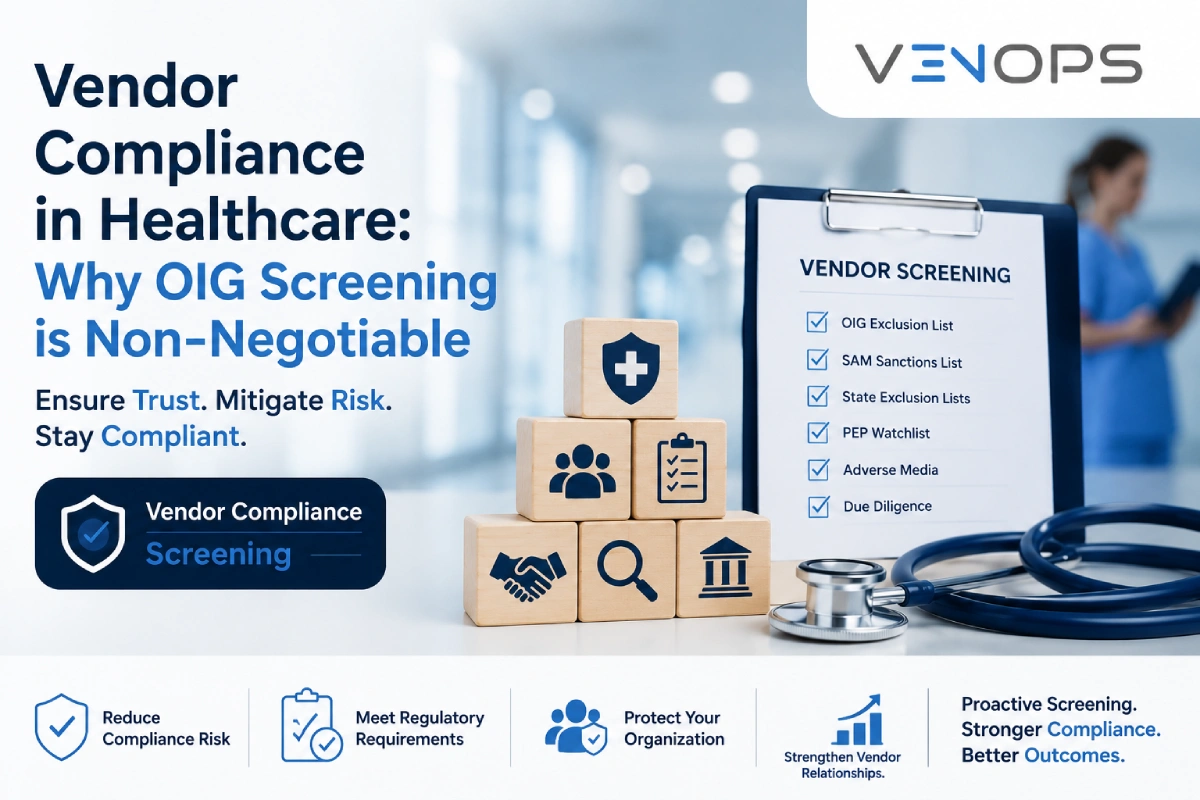
| Initial Screening | Running standard background checks, reviewing global watchlists, and assessing general corporate credit risk. | Mandatory screening against the OIG LEIE, SAM.gov, and all State Medicaid exclusion registries. |
| Deep Verification | Verifying standard business licenses, corporate registration status, and general industry operational certifications. | Validating specialized medical licenses, DEA registrations, facility healthcare certifications, and checking board disciplinary actions. |
| Affiliate Screening | Checking ultimate beneficial owners primarily for standard international trade and global compliance regulations. | OIG holds organizations accountable if vendor owners are excluded; affiliated leadership requires screening. |
| Continuous Monitoring | Conducting periodic, typically annual, manual reviews of overall vendor performance and financial stability. | Utilizing automated monthly monitoring for OIG and state list updates, preventing severe penalties. |
Best Practices For BulletProof Vendor Compliance
For successful risk management, it is important for healthcare institutions not only to make sure that screening will be done during the onboarding process but also to adopt a proactive approach. Here are the best practices to achieve bulletproof vendor compliance:
1. Establishing Compliance-First Onboarding Policies
Make sure the vendor has passed all the required OIG and SAM.gov screening before being allowed to start working or providing its services.
2. Automate Exclusion Checks
Use special screening platforms such as Venops to automatize the process and avoid any mistakes or oversights due to the fact that the tool will take into account even new exclusions.
3. Maintain Audit-Ready Documentation
The regulators will ask you to present evidence of your compliance efforts. Make sure your tool automatically keeps all the proof. That you perform your searches regularly.
4. Train Staff on Compliance Workflows
Ensure your procurement, HR, and compliance teams understand the severity of OIG exclusion and are trained on how to use automated monitoring tools effectively.
Final Thoughts!
A robust vendor compliance screening before partnering ensures the process helps form a basis for trust in any commercial relationship. However, in the context of healthcare, vendor screening is much more than just that puts too many things at risk all at once. It is about being in compliance, ensuring the safety of the patients, and protecting your company financially.
Getting out of compliance through working with an excluded vendor may cause huge losses for your healthcare organization. That affects the level of services that you provide to the patients, as the non-screened doctors, nurses, and vendors who supply products are unreliable. Using advanced automated screening tools such as Venops will enable your organization to remain compliant. By dodging federal penalties, maintaining its good name, and concentrating on the most important thing: providing outstanding medical services to its patients.
Screening vendors based on the exclusion lists of the Office of Inspector General (OIG) is an indispensable step. The reliability of your vendors influences not only your financial state but also affects patient safety, so don’t delay the screenings.
FAQs
What is the OIG Exclusion List (LEIE)?
How often should the healthcare organization screen its vendors?
The OIG and the Centers for Medicare & Medicaid Services (CMS) highly recommend that healthcare organizations screen their employees, contractors, and vendors against exclusion lists monthly, as those lists are being updated on a monthly basis.
What is Venops? And how does it help healthcare organizations?
Can Venops assist me in proving compliance during the audit?
Yes. Venops has been developed in a way that would allow you to prove that you have been conducting a continuous screening. The platform offers audit-ready reporting.
Is Venops capable of continuously monitoring vendors?
Sure thing. Unlike the conventional monthly manual process, Venops applies automated continuous monitoring. The moment a vendor becomes subject to any changes or is listed as excluded, there will be automated alerts sent to you.