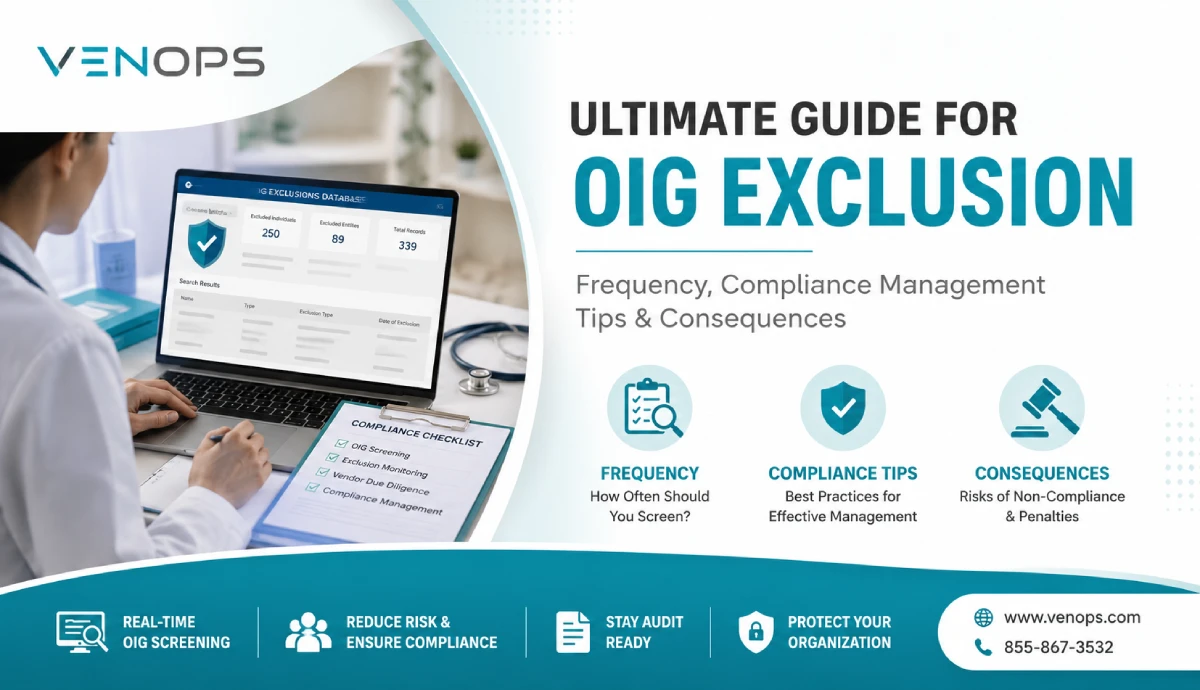
The meaning of peace, safety, and harmony in every sector requires the working people to be safe, friendly, and kind. Thus, the government ensures that those who don’t maintain it stay on the OIG Exclusion list, banning them from federal funds. These are the people who have either participated in fraud, done illegal work, harmed patients, or more. Therefore, the government took them into extreme attention, blocking their federal funds and employment from any organization.
If any organization seems to go against and hire such an entity, they have to pay a hefty sum of fine, and sometimes their practice gets blacklisted. These extreme conditions ensure no one engages or partners with people present on the OIG Exclusion list. In this guide, we will explore the practices to ensure compliance, the consequences of failure, and the screening frequency, along with an automation solution.
Best Tips to Follow For Maintaining Compliance in an Organization
Ensuring compliance is maintained is crucial to each facility so that the public trust is maintained and the patients are secure. Along with the security of employees and other people who depended on them, the government made it easy to do so. By having several list checks from LEIE, from LEIE, and the SAM.gov to state government list for checking OIG Excluded entities. Below are some of the best practices listed that are non-negotiable to maintain. For the safety, security, and long-term market presence of the organization.
1. Build Written Policy and Scope
Identify who will be screened, the databases to be searched, and processes for onboarding and re-screening. With a detailed list of all the people engaged with an organization, this work becomes easy and accessible. Assign accountability (Compliance is responsible: HR, Credentialing, Supply Chain, and IT are key partners). So, you can look up one team for the whole report regarding compliance.
2. Build Screening Into Existing Processes
Make screening part of the process of employment, start date, shift one, vendor access, or credentialing, and record each detail with accuracy. Make the integration with HRIS, Credentialing database, and vendor management automated to make the work easy and manageable for everyone.
3. Requirements for Screening Documentation
Keep proof of each search done (export, PDF, or screenshots) and keep details of each query. Document negative screening results and documentation for any possible match (including identity validation process). Record any approvals, corrective action plans, communication, and any other documentation needed for audits.
Keep screening documentation for as long as is required by the policy and payor requirements (typically 6-10 years).
4. Remediation Procedures
If active exclusions have been found, remove the person/organization from any federally reimbursed activities. Determine the financial liability period and do refund/recoupment activities along with any self-disclosure options. Make sure that future similar events do not occur and alert the leadership and your board committee if necessary.
5. Training and Testing
Conduct Role-specific training for recruiters, managers, credentialing, and the intake process. Periodically conduct audits and tracer reviews.
When and Why To Conduct The Screening For OIG Exclusion
The table below shows the timings or triggers you should follow for screening of OIG excluded entities. It will help your organization to be safe and sound by not partnering with blacklisted people. It has been divided into categories for initial or pre-hiring, ongoing, and triggering events that require screening.
| Screening Category | Timing / Trigger | Action Required & Objective |
|---|---|---|
| Initial / Pre-Hire | Prior to onboarding | Screen individuals and entities before work is performed or privileges are granted to prevent initial risk exposure. |
| Ongoing Baseline | Monthly | Establish monthly re-screening as the enterprise standard to catch changes quickly and meet state Medicaid and payor obligations. |
| Profile Changes | Event-Driven | Screen immediately upon name changes, new aliases, ownership updates, or role shifts affecting billing or access. |
| Elevated Risk Alerts | Event-Driven | Trigger checks following adverse licensure actions, sanctions, or media alerts indicating heightened compliance risk. |
| Corporate Actions | Event-Driven | Screen principals and key personnel during mergers, acquisitions, or when establishing new vendor relationships. |
| Risk-Based Contexts | As Defined by Policy | Document your rationale clearly if using alternate frequencies, ensuring mandatory monthly payor expectations are still strictly met. |
Consequences For Non-compliance In an Organization
The submission of any claim that involves an excluded party can lead to overpayment and can require reporting and recoupment. An entity can be subject to civil monetary penalties, assessments (possibly triple the amount submitted), exclusion from the program, and liability under the False Claims Act.
Some other consequences that can arise include the termination of contracts, revocation of enrollment, negative publicity, and expensive remediation through a high-intensity monitoring agreement.
Venops: Automation Tool For Screening
Automated OIG exclusion screening saves effort, improves match precision, and provides defensible audit evidence. Get the right tool to screen more broadly, for your employees, providers, contractors, and vendors.
Prioritize Capabilities
- Full scope of screening: LEIE, SAM system, and applicable State Medicaid list checks.
- Precise matching: Fuzzy logic matching with NPI/EIN/DOB capability, alias recognition, and adjustable thresholds.
- Ongoing screening: Automated monthly cycles with alerts for status changes.
- Workflow and auditability: Case management, resolution notes, and audit logs that cannot be altered.
- Integration and security: APIs to HRIS or credentialing systems, role-based access control, encryption, and HIPAA-compatible safeguards.
- Reporting: Compliance rates, match rates, time-to-resolution, and exception reporting for management.
Implementation Hints
- Begin with pilot projects for the highest-risk individuals before expanding enterprise-wide.
- Establish data standardization (legal name, NPI, tax ID number) to minimize false positives.
- SLAs for resolving matches and escalations to the Compliance team.
Wrapping It Up!
The OIG exclusion screening is not just about background checks, as it goes beyond that and secures an organization and its people. Every individual, from the third party to the top executive, needs to be checked against the list to ensure safety. It has been made strictly clear by the government that even unknowingly engaging with an excluded entity can get them in trouble. So, big organizations especially need to put lots of attention into every individual, vendor, or partner they connect with.
However, checking this manually is prone to errors and is time taking that’s why automation platforms like Venops are ruling the market. We are an automation platform that provides screens to large, small, and medium organizations, farms, and many others. Connect to ensure the longevity of your brand in the market as we keep away from excluded entities from the organization.
FAQs
What is OIG exclusion screening?
It’s the process of checking your workforce, contractors, and vendors against federal (like the LEIE) and state databases. To ensure excluded parties never touch services billed to federal healthcare programs.
Why is monthly re-screening required?
Exclusion statuses change constantly. Monthly checks are strictly expected by Medicaid and most payors to minimize your window of financial exposure, maintain compliance, and build a reliable audit trail.
What are the penalties for non-compliance?
The financial fallout is severe. Billing for services tied to an excluded party triggers massive Civil Monetary Penalties (CMPs) and forced overpayment refunds. Along with False Claims Act liability, it can even result in your own organization’s exclusion.
How can Venops automation improve compliance?
Automation handles complex data matching, runs continuous monthly cycles, and instantly generates audit logs. By stepping away from manual tracking and letting Venops automate the heavy lifting, you can effortlessly prove compliance at any scale.