Essential Vendor Management Techniques for Healthcare Organizations
Healthcare organizations must comply with strict quality and quantity regulations to avoid financial penalties and ensure patient safety. This also includes their current vendors and the vendor they will work with in the future. That is precisely it is their responsibility to first work with trusted vendors and secondly, manage them effectively. Here are a few tried and tested methods for vendor management:1. Robust Compliance Screening Process
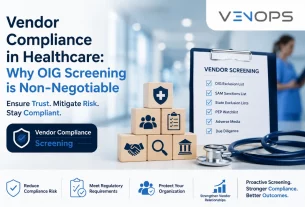
A robust vendor compliance screening process plays a crucial role during the initial phase of vendor hiring. It ensures that the vendor is qualified, has all the required quality certificates, and also has a clean financial background. Hiring a vendor without compliance screening can lead to financial and legal troubles and increase the risk of receiving low-quality services.2. Risk and Priority-Based Assessment
Not all vendors pose the same level of risk or have the same priority level. Therefore, before you create your vendor management plan, ensure it is based on the risks associated with each vendor and their priority. Consequently, you will be able to exercise caution with high-risk vendors and give their background verifications priority over those for other vendors.3. Strict Contract Compliance
Before entering into a contract with the vendor, double-check the contract and ensure it is prepared under the supervision of compliance experts. The vendor contract must be descriptive, with clear references to the finances and the vendor’s expectations and responsibilities. The contract must include data security clauses to protect patients’ information.4. Introduce Automation to Keep a Better Track
Automation is slowly getting into every prominent industry, including healthcare. Thus, healthcare organizations must leverage automation and advanced software to enhance patient safety and organizational integrity. There are multiple vendor management software available that will help you keep track of their activities, responsibilities, and payment status.5. Use High-level Comparison Before Finalizing
There are multiple options available in the market. While having multiple options is beneficial, it often leads to confusion and difficulty making quick, correct decisions. A simple answer to this problem is to use high-level comparisons. Do not base your judgment solely on pricing; look at service timing, any association with criminal activity, and market reputation.Why Vendor Management Matters for Healthcare Organizations?
Vendor management, led by exclusion screening, is essential for keeping a safe environment for patients. Vendors are responsible for providing crucial goods and services for healthcare organizations, including:- Medical Equipment
- Diagnostic machines, imaging systems, surgical instruments, and patient monitoring devices.
- Pharmaceutical Supplies
- Medicines, vaccines, IV fluids, and specialty drugs.
- Consumables & Disposables
- Gloves, syringes, masks, bandages, and other single-use items.
- Laboratory Services & Supplies
- Testing kits, reagents, lab equipment, and outsourced diagnostic services.
- IT & Digital Solutions – Hospital management systems (HMS), electronic health records (EHR), cybersecurity solutions.
- Security Services – Physical security, surveillance systems, and access control solutions.
- Improved patient care through high-quality products and services.
- Consistent and reliable supply of critical medical resources.
- Cost savings through optimized pricing and efficient contracts.
- Reduced operational and supply chain risks.
- Access to advanced technology and industry expertise.
- Increased operational efficiency and workflow optimization.
- Faster response times during emergencies or peak demand.
Smart Vendor Management with Compliance Screening by Venops
Vendor management with Venops is not only convenient but also fast and affordable. We provide robust compliance solutions for healthcare organizations to save them from working with bad vendors or vendors with questionable backgrounds. By striking the perfect balance between years of experience and automation tools, Venops saves you hours of work and allows you to focus on core services. Ensure accurate screening and high-quality services with Venops! Contact us to know more.FAQs
What are the risks of hiring excluded or sanctioned vendors?
The absence of vendor compliance screening leads to the following risks:
- Risk of heavy fines and legal action
- Damage to brand reputation and trust
- Disruption in the supply chain and operations
- Payments are getting blocked, or there are financial losses
- Loss of contracts and business opportunities.
Does vendor exclusions screening include OIG checks?
Yes, OIG checks and screening are a crucial part of the vendor screening process. It ensures that the vendor you work with, or plan to work with, is not in the OIG’s exclusion list. This saves you from high CMPs, fines, and reputational loss.
How often should I perform vendor verification?
Vendor verification is a continuous process and should be done at regular intervals. There is no fixed limit to how often you should perform verification. However, experts suggest that the verification process should be conducted monthly.
What are the best practices to follow when screening vendors?
Best practices for vendor exclusion screening include;
- Evaluate financial stability and track record
- Assess data security and risk management policies
- Review past performance, references, and client feedback
- Ensure clear contracts with defined SLAs and terms
How can I calculate the price for compliance services I need?
At Venops, you get a precise price calculator for the services. All you need to do is register from here, and once the registration is complete, you will be able to use the cost calculator.