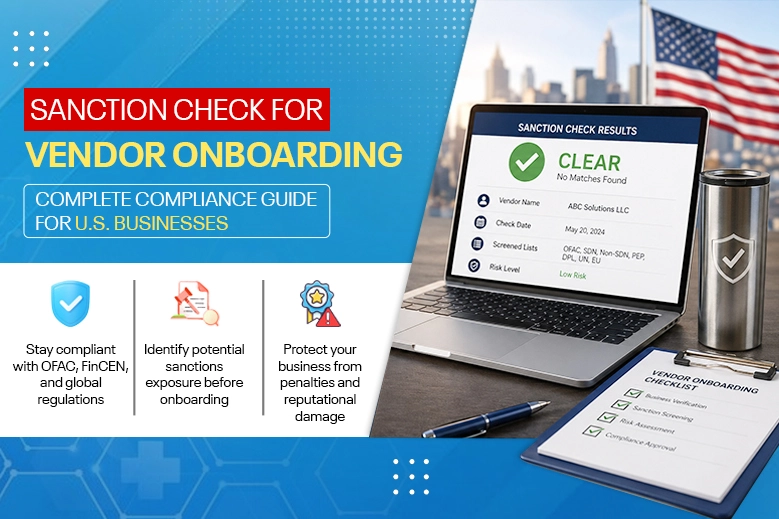
Has this ever happened that you’ve just approved a new vendor to join your organization? The next step is always the same: get their W-9 form, but what if that W-9 was hiding a major risk? The W-9 form only confirms their tax details and does not verify that their sanction checks are clear. It doesn’t tell you whether that vendor is on a government watchlist, such as one for sanctioned businesses or individuals barred from healthcare work.
If you ever billed those companies or entities in one of these lists, even by accident. It can lead to massive fines and serious legal trouble for your business. However, the good news is that protecting your company is easier than you think. It’s not a complicated or long procedure. You just need to automate your sanction checks service by partnering with a reliable onboarding services platform.
This guide will show you how to add critical new steps to your vendor onboarding. Performing a quick but powerful action and OIG checks. Let’s turn your standard process into a smart shield for your company.
Your 5-Step Blueprint for a Compliant Onboarding Process
Building a system that ensures compliance checks are not missed and completed on time is no longer complicated. By integrating the following five steps into your existing workflows, you can effectively identify OIG excluded entities and migrate risk from day one. These ensure the long-term stability of your organization.
1. Find Your Trigger Point
The best time for an organization to conduct a check on vendors is when they are approved, but they still have time before enrolling in a payment system. The timing between this prevents risks without wasting effort on vendors you don’t end up using.
2. Gather the Right Data
The only data, such as a W-9, isn’t enough for proper sanction checks. Rather, it requires a thorough background check to permit collecting vendors’ legal names and any doing business as DBA names.
3. Screen Against Key Watchlists
There are multiple lists maintained by the federal government and other authorities that collectively help ensure the vendor is safe. Therefore, you need to screen against all these lists without missing any. For every vendor, even if they are remotely connected to healthcare, a specific OIG check against the exclusion list. It’s absolutely crucial to avoid massive penalties.
4. Execute and Document Everything
Not just checking but keeping the record is also essential, ensuring a timestamped record of the search and its results. This audit trail is the bulletproof jacket that protects you, serves as proof of due diligence, and is a vital part of your compliance records.
5. Establish a “Hit” Resolution Plan
Keep planning in case you find a potential match. Having appropriate plans saves time and helps you take action faster. Create a simple protocol for your team to investigate flags and confirm whether they represent a true risk before making a final decision.
A Deep Dive: High Stakes of the OIG Exclusion List
While a general sanction search is akin to having a guard, the OIG check is similar to a customized vault guard for the health sector. It’s important to note that failing to conduct an OIG & other checks may prove costly for your organization, amounting to over a million dollars.
The Office of the Inspector General has an exclusion list comprising individuals and businesses that have been barred from taking part in government-funded health care programs because of any form of fraud or patient abuse. Should you employ an OIG excluded contractor for even the simplest task, such as offering information technology support and office cleaning services for your healthcare client, your organization is likely to incur hefty civil monetary penalties.
The risk pervades well outside the walls of the medical institution. For example, any company that sells products or services to a medical institution must verify that its vendors are not on the list. This is known as the “ripple effect,” which makes it clear why an OIG exclusion check is an essential process for more businesses than you might imagine.
Since the list is updated every month, it’s imperative to conduct regular checks. It’s easy to see how critical it is to develop a full-fledged Sanction Checks program to cover all bases.
Concluding Here!
Starting an employee contact comes with a lot of paperwork, risk, and other considerations. The W-9 marks the beginning. It should be followed by sanction checks, OIG, and other measures to ensure the employee’s eligibility. A reliable and truly secure vendor management system integrates compliance directly into its DNA. By implementing a structured process for these checks, you move beyond simple administration and into strategic risk management.
The risk of working with a banned individual is too severe to ignore. The modern business requires automated, fast, and reliable solutions that are proactive, documented, and repeatable on their own. With changing times and crime rates, compliance checks are no longer optional. They have become essential for survival and growth, so ensure you integrate Venops for sanction checks when onboarding vendors.
FAQs
What’s the main difference between sanctions and an OIG check?
A sanctions check is a broad term that screens an entity against multiple government lists, such as OFAC lists for terrorism or trade violations. On the other hand, an OIG check is specific to healthcare and identifies parties excluded from participation in federal healthcare programs due to fraud.
How often should we perform sanction checks on our vendors?
It depends on starting from performing a comprehensive check during onboarding. For high-risk vendors or those in regulated industries (which require an OIG check), continuous monthly monitoring is the best practice to ensure ongoing compliance and avoid penalties.
We work with global vendors. Do your checks cover the international watchlist?
Yes. Our platform integrates thousands of global watchlists beyond just U.S lists like OFAC. We ensure vendor compliance is secure, no matter where your partners are located worldwide. We don’t take the risk of any gaps in the implementation of compliance checks.
My team is already overwhelmed. How can Venops help reduce its workload?
Venops fully automates the sanctions and OIG exclusion checks within your existing vendor onboarding workflows. That results in background checks being conducted silently and only alerting when a risk is found. These advanced features eliminate manual effort, reducing workers’ workload.