The industries are market-handled and maintained by individuals with clear records, and sanctions checks are the key foundation for this. An individual with a criminal or illegal record can never make any organization shine, whether as an employee or a community head. It has been seen that a thriving company one day is facing a seven-figure fine the next, all because of an overlooked vendor. It’s not just a hypothetical situation but a compliance reality of industries. In a globalized economy, every business interacts with individuals, vendors, and contractors worldwide, and each interaction carries a risk if not properly managed.
So, can simple sanction checks really be the safety net that saves you from penalties and the reputational nightmare of getting blacklisted? The definitive answer is yes, it can, and this article shows you exactly how.
What Exactly Is Sanctions Screening, and How Does It Protect Healthcare Organizations
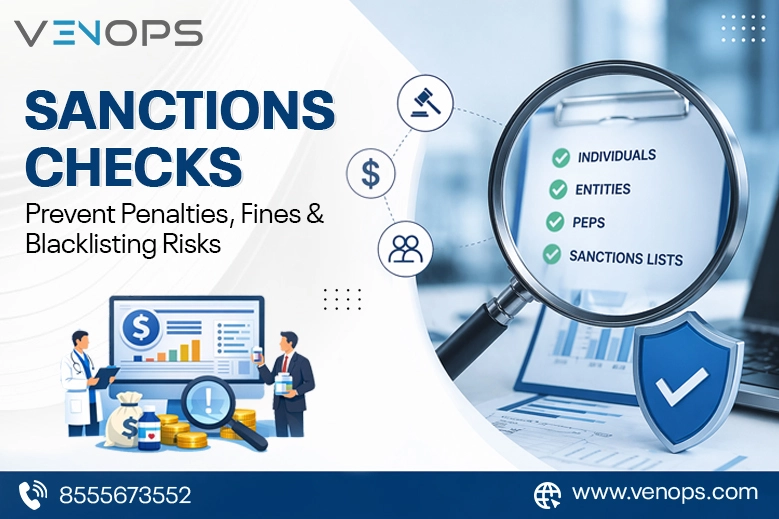
Sanction screening is also known as OFAC screening, watchlist screening, or financial crime screening. It’s a vital component of financial crime compliance, ensuring individuals and entities are systematically checked against government watchlists to mitigate risk. Mainly related to money laundering, terrorist financing, and other illicit activities. The screenings require more than one list from each body to check, including OIG Check, SAM, OFAC, FACIS, and more. Here are a few properties of the sanction check.
- It goes beyond simple name matching and requires analysis of the corporate ownership structure.
- While adhering to rules such as OFAC’s 50% rule, it includes assessments of ultimate beneficial owners to uncover hidden relationships to sanctioned firms.
- The secondary section adds an extra layer of complexity for foreign entities engaging with sanctioned parties.
Which Bodies Maintain the Sanction Lists?
These vast watchlists are created and managed by a network of government bodies and law enforcement agencies. Here’s a list of key entities.
1. National Authorities
- Office of Foreign Assets Control (OFAC): OFAC, which stands for the Office of Foreign Assets Control, implements American sanctions programs as an agency within the Treasury Department. The key mechanism that OFAC employs to sanction specific individuals is the SDN list, which means that the parties listed here should not conduct any business operations with any American company. The legal basis of OFAC includes several laws, including the International Emergency Economic Powers Act and the Trading with the Enemy Act. There are also some specific laws, such as the Foreign Narcotics Kingpin Designation Act and the Antiterrorism and Effective Death Penalty Act. In addition, executive orders such as Executive Order 12947 have significantly expanded OFAC’s jurisdiction.
- HM Treasury: The authority made and designated for the United Kingdom’s sanctions for the overseas UK sanctions list that describes all financial targets.
- EU Sanctions: The European Union maintains a centralized sanctions mechanism through its consolidated list of people, groups, and businesses subject to EU financial penalties. Each member state is responsible for enforcing the penalties that the EU as a whole establishes.
2. International Organizations HM Treasury
- United Nations Security Council (UNSC): It has the authority to impose global sanctions under Article 41 of the United Nations Charter.
- World Bank and IMF: The World Bank also maintains a list of barred individuals and ineligible firms prohibited from participating in World Bank-financed contracts.
3. Law-Enforcement Agencies
- Financial Action Task Force (FATF): It’s not directly responsible but holds authority to issue guidance on sanctions implementation and on identifying high-risk jurisdictions.
- Interpol: It also manages and issues red notices for individuals who are wanted for prosecution.
Industries That Require Sanctions Checks Without Delay
An OIG Check is not just essential in healthcare organizations. It is also essential in numerous other areas. The table below explores all the industry-specific requirements that require sanctions screening and fall under compliance check risks.
| Industry | Compliance Drivers | Key Risks | Frameworks |
|---|---|---|---|
| Financial Institutions | BSA, USA Patriot Act, AML/KYC obligations | Money laundering, terrorist financing, fines, and reputational damage | OFAC, FATF, FinCEN |
| International Trade | Export controls, OFAC & BIS regulations | Illegal exports, blocked transactions, frozen assets | OFAC, BIS |
| Insurance Providers | Screening policyholders & beneficiaries | Claims from sanctioned regions, regulatory penalties | OFAC, EU regulators |
| Healthcare Organizations | Vendor & transaction checks, pharmaceutical compliance | Illegal drug use, blocked supply chains | OIG, OFAC, global regulators |
| Gaming & Crypto | KYC compliance, fraud prevention | Unauthorized transactions, AML violations, customer abandonment | OFAC, FATF |
| Technology Companies | Export restrictions, AI model compliance, cloud service obligations | Data transfer violations, export of restricted tech | OFAC, BIS, EU regulators |
| Nonprofit Organizations | Donor & recipient screening, humanitarian exemptions | Indirect support to sanctioned entities, reputational damage | OFAC, FATF, local regulators |
| Professional Services | Advisory work, cross-border transactions, complex ownership structures (50% rule) | Liability for direct/indirect support, compliance gaps | OFAC, FATF, global bodies |
Concluding Here!
The risk of failing to conduct thorough and proper sanction checks is enormous. Mainly, it affects the reputation of organizations, as fines and penalties are charged along with the fear of blacklisting. That can be a nightmare over a minor mistake of missed vendor, employee, or contractor screenings. Therefore, switching to automatic compliance checks offers a direct, effective shield, saving your organization from damage.
The Venops platform offers a custom screening service that transforms compliance into a strategic advantage. We ensure your business is built on a foundation of integrity and security. Don’t wait for a compliance letter to force your hand. Get the sanction checks automated from today on to protect your finances, reputation, and future.
FAQs
How often should these screenings be done for safety?
Best practice is to screen all new hires and vendors initially, then follow it with continuous monthly monitoring. It helps catch when the status changes.
Can your service screen against global sanction lists, not just U.S. ones?
Yes, our platform is designed for global business. We can screen against a comprehensive set of international watchlists, including those from the UN, the EU, the UK, and others.
How does your service integrate with HR software to automate screening?
Our Platform offers a flexible solution that seamlessly integrates with most major HR and ATS platforms. Therefore, automated sanctions screenings can be done during onboarding to streamline workflow without manual effort.
If a potential hit is found, what support do you provide to interpret results and decide next steps?
Our system updates instantly with information. Additionally, our support team is also available to help you navigate the next steps. Contact us today and start the safe journey.