The OIG screening has become an integral part of every organization that aims to work for the long term. The screenings help protect the organization from partnering with vendors and employing individuals on the government’s exclusion list. These are used across industries to identify any faults and shortcomings. However, these become critical in the healthcare industry and facilities, where patient care is vital, and lives are on the line.
So, the screening is conducted before ever connecting with an outside entity to protect the insiders. The OIG screening is conducted across multiple lists, including government and state government lists, and sometimes international lists. Therefore, the traditional manual check method is no longer reliable or effective. So, this guide will help you understand how automating this screening is beneficial and effective through the platform.
Which Criteria Does The Venops Use for OIG Screening
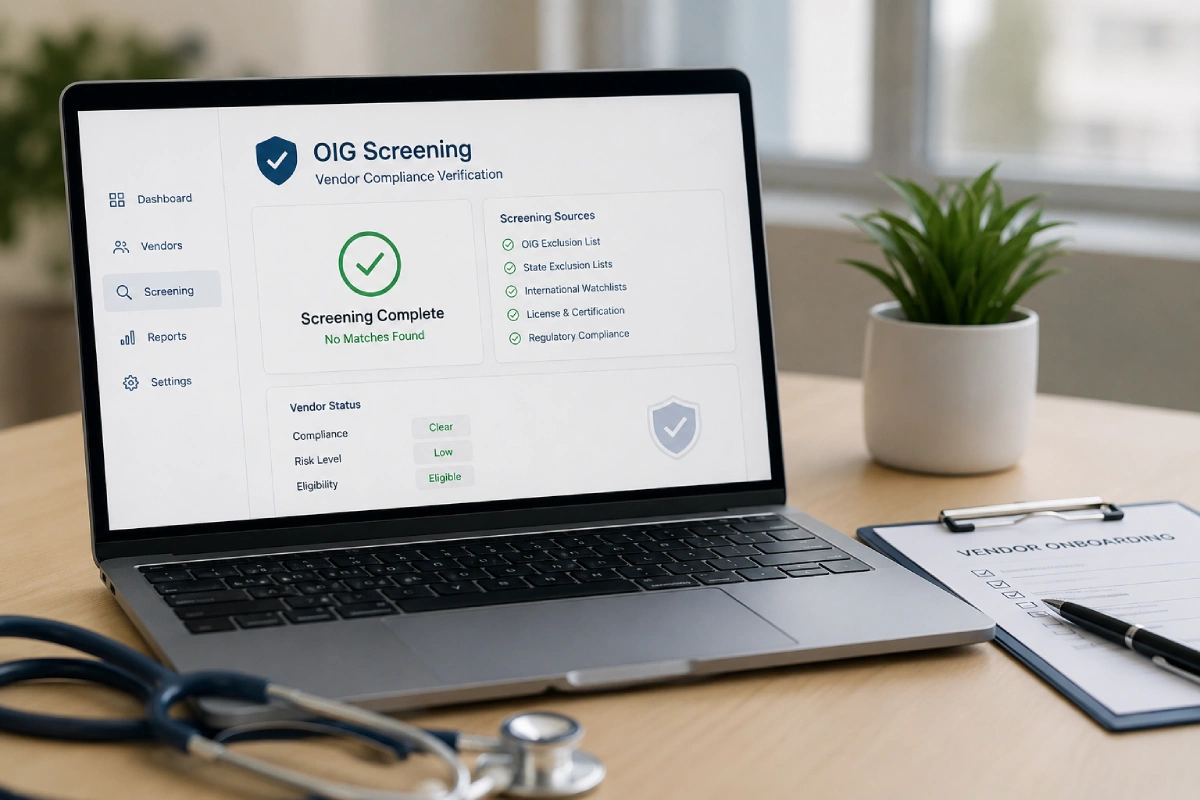
Having criteria helps organizations make fast, clear decisions about which vendors and employees they want to work with. The Venops connects with the organization to ensure these OIG screening requirements are met and conducts a thorough evaluation of vendors. The foundational steps protect organizations from regulatory risks and ensure that only qualified vendors move forward in the evaluation process.
| Criteria | Expanded Description |
|---|---|
| Federal OIG Exclusion List | Automated verification against the U.S. Office of Inspector General’s database ensures vendors are not listed on federal exclusion records. This protects organizations from unknowingly partnering with entities barred from federally funded programs. |
| State Government Exclusion Lists | Screening across state‑level exclusion lists captures region‑specific risks. Venops ensures vendors are compliant not only nationally but also within the states where they operate, reducing localized compliance gaps. |
| International Watchlists | When applicable, vendors are checked against global exclusion databases. This step is critical for organizations with international operations, ensuring cross-border compliance and preventing exposure to global sanctions. |
| Licensing & Certification | Venops validates professional licenses and certifications to confirm vendors are legally authorized to provide services. This protects organizations from engaging with unqualified or fraudulent providers. |
| Regulatory & Ethical Compliance | Beyond technical checks, Venops reviews adherence to healthcare regulations and ethical business practices. This ensures vendors align with organizational values and maintain integrity in patient care and service delivery. |
Leveraging Screening Results for Vendor Scoring and Alignment
Once the initial vendor compliance screening is completed on the Venops side, organizations can use the verified results to build a structured scoring framework. This ensures that compliance remains central and operational performance is balanced. These ensure that double security and transparency are maintained between the organization and the vendor, and a long-term partnership is maintained. With assurance that protection is maintained and no one is at risk.
1. Compliance Adherence
Use Venops’ screening results to ensure that vendors you partner with comply with OIG and regulatory guidelines. It ensures that the product quality is superior and is safe and secure to use for patient care.
2. Eligibility Criteria
Check and evaluate the vendor to ensure it meets the requirements of organizational needs, along with certifications needed to maintain market standards. All these qualifications are beyond just compliance.
3. Quality of Service
Review their past performance and their track record of consistently producing successful outcomes to ensure they have the capacity to deliver. This type of evaluation, in addition to vendor compliance screening, makes the organization more secure when using external services.
4. Cost Efficiency Value Assessment
Compare pricing against the value delivered to ensure that the affordability of goods and services is balanced. These provide a clear picture of how to ensure value is received without compromising adherence to regulations, based on cost analysis.
5. Vendor Risk Analysis
Assess the vendor’s ability to mitigate operational, financial, and compliance risks to ensure long-term stability. These help organizations map out the future problems that could be associated with the vendors. By securing information, they know the long-term partnership with a consistent supply of materials is ensured.
It will enable firms to develop an auditable list of ranked vendors using Venops’ screening process. It does not diminish Venops’ work, as initially screening against multiple databases is still vital and accurate results are assured only with Venops. Instead, it enhances its value by adding another layer of analysis to its service offering.
Final Words!
Every faculty looks out for their well-being, and integrating fast, reliable, and automated OIG screening makes their determination more successful. While the company may still stick with manual screening, we all know it’s neither effective nor ideal amid the evolution of technology. Previously, these federal government lists were updated with long durations in between. But global issues and technological advancements have changed the picture. Now the lists are updated more frequently, and the lack of screening and inconsistencies in screening put the organization at risk.
Therefore, Venops introduces a solution: an automated platform from experts in screening and compliance checks of all types. Contact us today to automate your vendor onboarding list and save time on checks, ensuring accurate results in no time.
FAQs
In what way does Venops safeguard my organization from OIG Screening?
Venops will automate checking against exclusions that come from the federal, state, and, at times, even international levels. Your organization will therefore be protected from doing business with vendors that have violated compliance regulations.
Is it possible for vendors to become eligible even if they don’t pass initial screening?
Yes, this is possible. If vendors fail in their OIG and compliance checks, they will have another chance to apply if they meet requirements, like renewing their license and certification.
What is the frequency that organizations must perform Vendor Compliance Screening?
It is important to do screenings frequently, either quarterly or biannually, depending on the level of risk in that particular industry. Venops encourages continual monitoring, ensuring vendors remain in compliance throughout and avoid complications after onboarding.
What makes OIG Screening very important in health care organizations?
The reason health care organizations are at greater risk is that patient safety and governmental funding are involved. The OIG screening ensures that no relationship occurs with an excluded party provider.
Why is Automated OIG Screening more reliable than manual screening?
The manual process takes time and has room for human error. Automated OIG Screening done via Venops is fast, accurate, and ensures thoroughness when running through different exclusion lists.