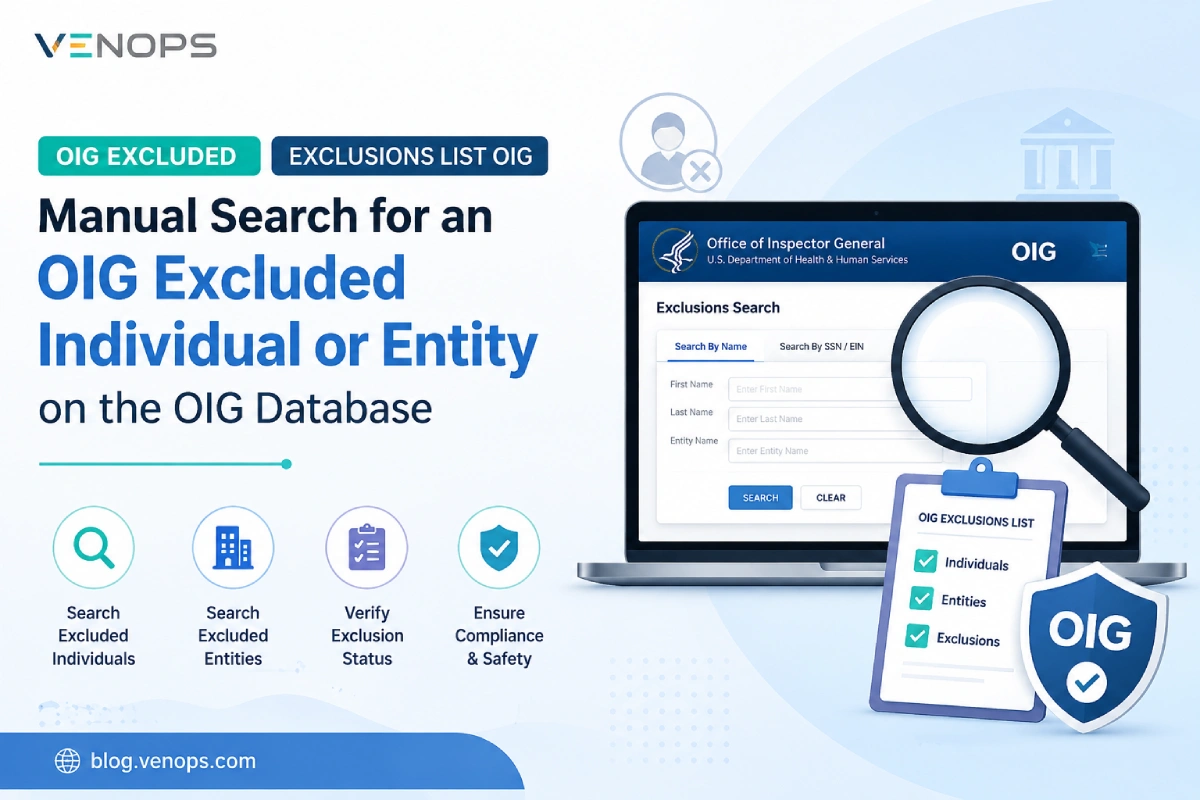
The LEIE or the List of Excluded Individuals and Entities is available to the public on the official OIG website. Anyone can access the large database and search for an OIG excluded individual or entity by name. There are separate sections for entities and individuals on the search page, allowing you to search for each separately. The search takes hardly any time and provides possible matches along with additional information, including their full government name, specialty, and the exclusion section.
In this blog, we will cover key tips to improve the accuracy of your manual OIG exclusion searches. This will directly translate to better compliance with the strict regulations and save you from significant financial penalties.
Improve the Accuracy of Your Search for the Excluded Party
Exclusion search or screening is only purposeful when done right and accurately. The absence of adequate search results can lead to trouble in hiring processes and working with excluded parties. Both situations are disastrous for healthcare organizations. Use the following tips to increase the overall accuracy and effectiveness of your search for excluded parties:
1. Search Beyond Name
Once you enter a name in the OIG exclusion database, you will receive potential matches, and in most cases there will be multiple matches for the same name. In such cases, further verify the OIG excluded party using their SSN (Social Security Number) and EIN (Employee Identification Number)
2. Try Name Variations or Enter the Parts of the Name
To further improve the search accuracy and find the right individual, enter only a part of their name. This will help you retrieve more names and results to properly verify the excluded party. When using the online search, try entering name variations, aliases, and government names.
3. Clean and Verify the Data Before Searching
Before worrying about whether you are using the OIG database search correctly, make sure you have the right data. Collect employee and staff data from your organization’s database, check for spelling mistakes, and make sure every name is present on the database.
4. Online vs Offline OIG Search
There are two ways to search the OIG database. First, by using the online database and searching with the first and last name. The other way is to download the CSV file of the exclusions list OIG, which contains all information about excluded individuals and entities.
5. Maintain Proper Documentation
Documenting your searches is extremely important to ensure an audit-ready defense in the event of legal trouble. Additionally, keeping a record of the exclusion search will help improve the efficiency of future searches by tracking previous results.
Outsource the Exclusion Screening for Faster and More Accurate Results
While it is possible to manually search the OIG database, it is not always the most efficient or cost-effective. Depending on the scale of the healthcare organization, verifying the exclusion status of every employee, medical staff, vendor, and third-party service provider can take a substantial number of working hours. On top of that, general healthcare staff are not aware of the complexities of compliance regulations, which impacts the accuracy of searches for OIG-excluded parties.
Common benefits of outsourcing the OIG exclusion screening are mentioned below:
- Access to specialized compliance expertise and exclusion screening best practices.
- Improved screening accuracy with advanced matching and verification processes.
- Reduced risk of overlooking excluded individuals or entities.
- Continuous monitoring for newly added exclusions and status changes.
- Faster screening of employees, contractors, vendors, and physicians.
- Lower administrative burden on internal compliance and HR teams.
- Consistent documentation and audit-ready screening records.
- Easier management of large-scale and multi-location screening programs.
- Better regulatory compliance and reduced risk of penalties or repayment obligations.
- Cost-effective access to screening technology without significant in-house investment.
Comprehensive Compliance Screening Solutions by Venops
Venops, a leading compliance service provider, offers OIG screening services supervised by industry experts with extensive experience. We handle the complexities of the compliance screening process so you can focus on your core healthcare operations. Moreover, you can connect with our compliance and legal experts through online and offline consultations. This will help us understand your requirements for OIG excluded screening and provide you with personalized screening solutions.
FAQs
What is an OIG exclusion search?
An OIG exclusion search is a screening process used to determine whether an individual or entity is present on the Office of Inspector General (OIG) List of Excluded Individuals and Entities (LEIE). Consequently, it helps you avoid working with OIG excluded individuals and saves you from penalties and fines.
Why is OIG exclusion screening important for healthcare organizations?
Exclusion screening prevents the organization from hiring individuals and entities that are prohibited from Medicare, Medicaid, and other federal healthcare programs. This is extremely beneficial as it saves organizations from financial and legal trouble.
How often should OIG exclusion searches be performed?
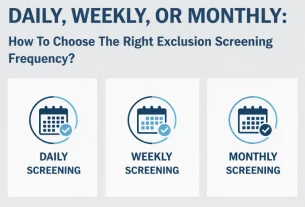
As suggested by experts, OIG exclusion searches should be performed every month. It ensures that all medical staff are screened against the latest OIG database.
What are the possible errors that are associated with manual screening?
Some of the common errors include:
- Human errors caused by data entry mistakes, misspellings, or overlooked records.
- False positives and false negatives due to inaccurate name matching.
- Inconsistent screening practices across different teams or locations.
- Delayed identification of newly excluded individuals because of infrequent checks.
Organizations generally screen using identifiers such as full legal name, date of birth, Social Security Number or Tax ID (where permitted), National Provider Identifier (NPI), and business information for entities.
What happens if a match is found during an OIG exclusion search?
A potential match should be reviewed and verified using additional identifiers and documentation. If confirmed, the organization should follow its compliance procedures, which may include suspension of duties, termination of contracts, reporting obligations, and corrective action.